
Classroom Games That Teach
Classroom games work best in grades 6–12 when they have a clear learning goal, a short time limit, and a way to check what each student knows. The strongest choices are quick bell ringer challenges, team review rounds with individual checks, history evidence challenges, and career-prep scenarios — all run with clear roles and a stop signal.
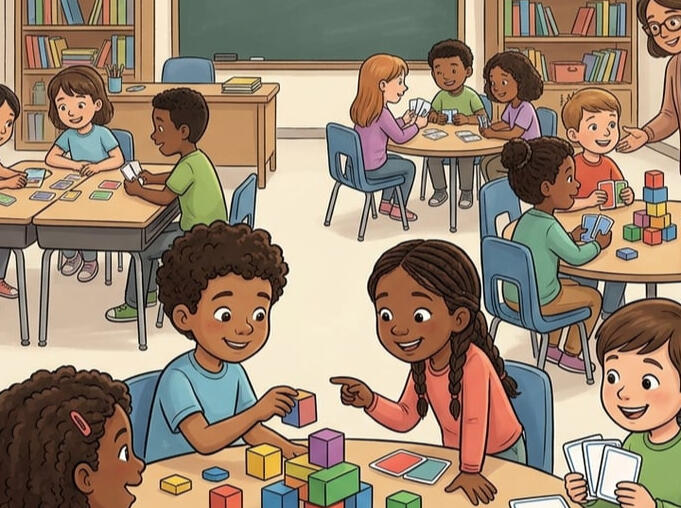
Bell Ringers & Warm-Ups
Two-Minute Odd One Out
Put four terms on the board — one doesn't fit. Every student writes which term is the odd one out and why, in one sentence, before anyone talks.
Timing: 3 minutes, plus 2 to share.
Learning check: Scan the room or collect a quick sample of responses.
Run it at the same point every day so it becomes a routine. Word scrambles, pattern puzzles, and quick estimation prompts make good openers too.
Team Review Games
Numbered Heads Review
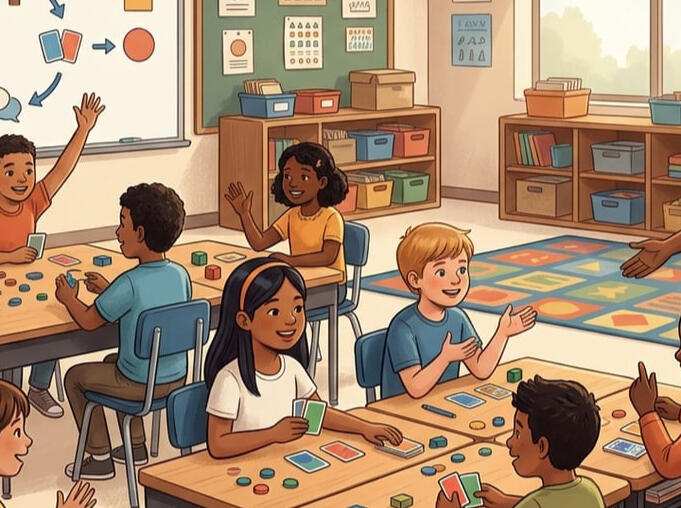
Put students in groups of four, numbered 1–4. Ask a review question and give teams 60 seconds to agree. Call a number — that student answers alone on a mini whiteboard or scrap paper. Award points only for answers the chosen student can explain.
Timing: 8–10 questions in about 15 minutes.
Learning check: Close with a three-question exit ticket each student completes alone.
Pictionary on mini whiteboards, 20 Questions, and the Hot Seat work as quick variations.
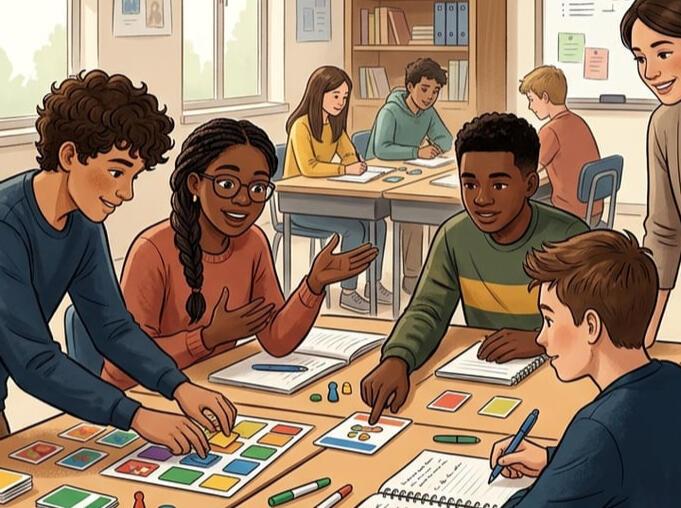
History & Social Studies
Source Detective
Give each group three or four short primary-source excerpts or images and a claim, such as “This event changed daily life for workers.” Groups decide which source best supports or challenges it.
Timing: 12 minutes to investigate, 8 minutes to defend.
Roles: Reader, note-taker, evidence checker, speaker.
Learning check: Each student writes one claim with one piece of cited evidence before leaving.
For a movement version, run it as four corners and have students defend their chosen source.
Career Prep
Workplace Problem Rounds
Give groups a short job scenario, like a missed deadline or a customer complaint. Teams have 10 minutes to agree on a plan and assign who does what.
Learning check: Each student writes which of the seven traits — participation, listening, communication, responsibility, cooperation, flexibility, respect — they used and what they would change.
It links class work to the skills employers name, including time management and problem-solving.
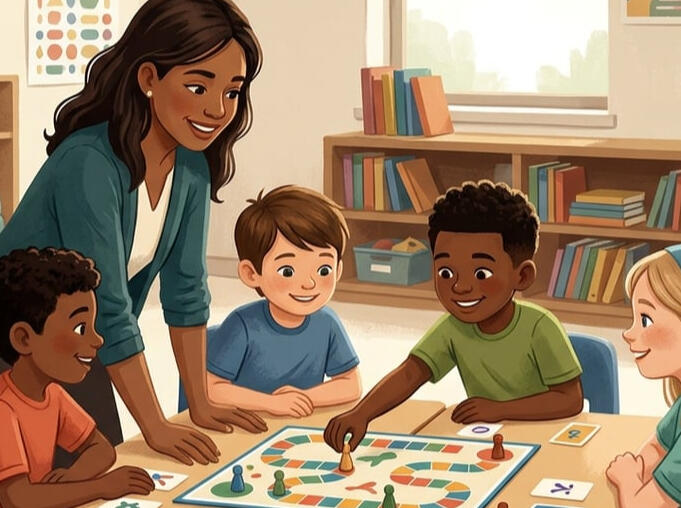
Classroom Management
Keep Game Days Predictable
Games stay productive when students know the rules before the first round starts. Teach the structure once, then reuse it.Set rules, roles, and a stop signal. Post the rules and say them out loud. Assign groups and roles yourself until students show they can handle more choice, and use a visible timer for each round. Practice 3-2-1-Done before the game so it means quiet and eyes up on the first try — classes earn points for being quiet by the countdown and lose a point for each second after “done.”Skip the devices. Paper, mini whiteboards, index cards, and a projected timer cover every game on this page. Give roles that fit different strengths and offer sentence starters for speakers. IEPs, behavior plans, and required accommodations come first.Recognize listening, responsibility, and cooperation. Name what you see: “Jordan’s group waited for every member to answer before deciding.” Use the same seven traits in recognition and in your teamwork rubric, and send a short positive note home after a strong round.Redirect privately, then return to learning. Start with a quiet encouragement near the student’s desk, then a second in the same calm tone. After two, have a short private talk that begins with “What’s going on?” Then invite the student back into the next round.
FAQ
Frequently Asked Questions
Which classroom games work well for high school students?
Games with a real task work best, such as evidence challenges, numbered-heads review, and workplace scenarios. Older students respond to clear roles, short time limits, and points tied to explained answers.Can I run classroom games without student devices?
Yes. Every game on this page runs with paper, mini whiteboards, index cards, and a projected timer.How can I include students who dislike competition?
Offer roles like note-taker or evidence checker, and score the whole class against a goal instead of other teams. Recognize listening and cooperation out loud so students see more than one way to contribute.Can I use classroom games in emergency substitute plans?
Yes, if the game is already a familiar routine. Leave written rules, roles, a timer, and an exit ticket so the sub can run it and you can check learning later.How do I check individual learning during a team game?
Call on one student to answer alone, then close with a short exit ticket. Each student’s written response shows you who needs reteaching the next day.Who writes Elevate the Norm?
Clay Shumate, a practicing secondary teacher with Class A certification in grades 6–12 Social Studies, a B.A. in History, an M.Ed. in Secondary Education, and more than a decade of varsity coaching. Results from his classroom are practitioner observations; see the editorial standards to request a correction.
Free for Teachers
What Can You Use for Free?
The classroom framework, teaching guides, and ten printable tools for grades 6–12 are free — no email address required. Print and share them for classroom and department use; just keep the credit line intact. The paid toolkit is optional and separate.
Free Guides & Printables
Free
Tools that support game days directly:
Routines & Procedures Checklist — write out setup, stop signal, and cleanup
Seating Chart Template — plan team placement
Teacher Reflection Journal — note what worked in five minutes
Parent-Teacher Communication Logs — record positive calls home
Attention-Getters Guide — the 3-2-1-Done routine
Teacher Emergency Toolkit
Optional
Print-and-go backup for the hard days on Teachers Pay Teachers: de-escalation, work refusal, behavior documentation, full lessons, and sub plans.
Daily Reset Bell Ringers — 180 prompts for a steady opening routine
First 10 Days Procedures Checklist — free sample
Stay in the Loop
New Free Downloads
Elevate the Norm is written by Clay Shumate, a practicing grades 6–12 social studies teacher. An optional email list announces new free downloads. For staff training or classroom questions, visit the contact page or the questions and answers page.
Most-used free resources: student-led conference template (PDF + Word), 1-4 grading scale explained, and a Socratic seminar rubric for grades 6-12.
© Elevate the Norm · Clay Shumate. All rights reserved.
Thanks
You're on the list. We'll let you know when new free grades 6–12 downloads are ready.